

The U.S. District Court for the District of Nevada recently issued a detailed decision and order granting Barton’s client a preliminary injunction in a case involving claims of trademark infringement and trade dress infringement. (Go New York Tours, Inc. d/b/a Tea Around Town v. Tea on the Strip, LLC. Case No. 2:25-cv-00279-RFB-EJY.)
Barton’s client, Go New York Tours, Inc. (GoNY), offers a “Tea Around Town” experience where customers can ride a double-decker tour bus around New York City while sightseeing and enjoying a tea party with beverages and finger foods.
The defendant in the case, Tea on the Strip, LLC, offers a similar experience in Las Vegas and operates buses with similar trade dress design elements as GoNY’s buses. The Court’s order notes that GoNY is exclusively licensed to use the ‘Tea Around Town’ mark and that the experience includes distinctive branding, namely the interior and exterior designs of the tour buses, which include elements such as florals, sparkles, pearls, and a color scheme of pink, white, and gold.
On February 11, 2025, GoNY filed a complaint alleging that Tea on the Strip had violated its intellectual property rights by copying aspects of its Tea Around Town trademark and trade dress. GoNY sought a preliminary injunction to prevent Tea on the Strip from continuing to use these elements when operating its business.
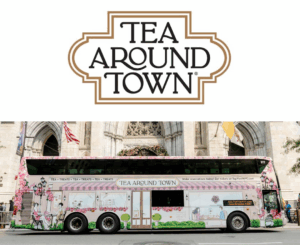
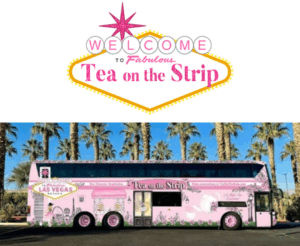
In its order, the Court engaged in a detailed analysis of the factors and standards that had to be satisfied in order to prove a claim for trademark infringement and trade dress infringement.
A party seeking preliminary injunctive relief must make a “clear showing” that: (1) it is likely to succeed on the merits, (2) it is likely to suffer irreparable harm in the absence of preliminary relief, (3) the balance of equities tips in its favor, and (4) an injunction is in the public interest. The majority of the Court’s order focused on the first requirement regarding the likelihood of success on the merits of GoNY’s infringement claims. Among other things, Barton and its client demonstrated the items below in a manner the Court found satisfied the rigorous requirements that needed to be met to issue the preliminary injunction.
Trademark Infringement
In order to prevail on a trademark infringement claim, a plaintiff must show that the alleged infringement is likely to deceive or cause confusion among consumers. To evaluate this, the Court considers eight factors known as the “Sleekcraft” factors from the 1979 Ninth Circuit case AMF, Inc. v. Sleekcraft Boats. The Court found that GoNY’s claims satisfied these eight factors in the following ways:
Trade Dress Infringement
In prevailing on the trade dress infringement claim, Barton and its client proved:
The Barton team members handling this case included: Maurice Ross (Partner); Tara Aaron-Stelluto (Partner); George Pikus (Associate); Barak Bacharach (Associate); and Justin Cabanas (Paralegal).
 Tara Aaron-Stelluto
 Maurice N. Ross
 Barak Bacharach
 George Pikus